21 May, 2013

"But This Goes to 11..." Meme

I don't mind memes too much. Our own take on a defined set of questions. Variations on a theme, something I've always found fascinating in movies.

So thanks to Kath Lockett over at Goofing Off in Geneva for throwing this my way. She put me onto it ages ago and it's been languishing in my drafts folder forever.

1. When and why did you start blogging?
I'd been enjoying reading many brilliant blogs for about two years from say, 2005 to 2007 until finally it occurred to me to give it a go myself. I was apprehensive about whether I could add anything to the blogosphere but liked the idea of having a creative outlet and an audience for it, however small.

2. What is your middle name and why did your parents select it?
Joseph. Apart from being a good old-fashioned Mick name, I think it must have just flowed with my first given and family names. And thanks to mum and dad for making it happen that way. Flow is important where names are concerned. When we were choosing names for Moe; Larry; and Curly there needed to be no alliteration, and nothing that would sound funny when put together, like Evel Knievel or Loudy Tourky.

3. Toilet paper folder or scruncher? Provide your reasons
Probably a combination of the two depending on my disposition and the type.

You're sorry you asked, I know. But if you're reading this on the toilet, I hope you're in the Type 3 to Type 5 range.

4. What do you do at home when everyone else is out?
Play MY music. At MY volume.

5. You've been given five hundred bucks (two hundred and fifty quid, say) to spend on nothing useful and just your self. What do you do with the cash?
Amazon, folks. Five hundred bucks would clear my wish list out very nicely. I've listed mostly albums I've always wanted to own but never got around to buying and DVDs of my favourite rock artists.

In particular, The Complete Monterey Pop Festival, which is a 3-DVD expanded edition of the film Monterey Pop (1968) and includes the original Monterey Pop release and another disc containing the complete Otis Redding and Jimi Hendrix performances plus a further disc featuring artists and performances that didn't make it into the original film. I already own it but I loaned it out to someone a couple of years ago and can't remember who.

There is also a DVD set of The Caesars, a 1968 BBC series that closely follows Robert Graves' I, Claudius, that I've had my eye on.


6. It's finally come true. One of the "five celebrities you're allowed to sleep with" has walked into your kitchen and is up for it. Who is it?
This assumes we're in a parallel universe where I'm both single and unencumbered, right? Okay, it's probably way too obvious but the one making goo-goo eyes at me from the kitchen doorway while I'm busy unloading the dishwasher is Jennifer Love Hewitt.


7. Name one famous person (so that all our readers know who it is) that you think 'has their shit together'. Explain why.
This is difficult, but only because I think there are many worthy candidates. Just at random, I'm going to nominate film director Martin Scorsese. There's his ultra-impressive and profoundly influential feature filmography going back to Taxi Driver (1976) through to Shutter Island (2010) but it's easy to forget that he's also helmed exhaustive, beautifully rendered documentaries such as A Personal Journey with Martin Scorsese Through American Movies  (1995); The Blues (2003); and Living In The Material World (2011). Two brilliant careers in one.

8. What makes you get out of bed in the morning?
There's a clock-radio next to the bed that ushers in the new day for me. I'm alternately grateful and resentful for the invention of the snooze button.

9. Who would you like to smack in the face, publicly disprove all of their stupid opinions and freeze their bank accounts?
I'll eschew the personal violence and attempt at impoverishment. But there are just far too many extreme right-wing lickspittle commentators infesting the Main Stream Media in Australia, particularly News Ltd and commercial talk radio. And I would so like to see them all come a complete cropper that to pick one at random seems almost unfair. However, Brendan O'Neill will do very nicely for the moment.

Certainly, this self-styled "contrarian" (and it's a very selective form of "contrarianism") is a dream come true for neo-conservatives, and it's simply a serendipitously delightful coincidence that all of his opinions, every single one of them, on every issue, no matter what it is, err on the side of advancing News Ltd's interests and prevailing worldview.

And err he certainly does: the first time I saw him on ABC-TV's QandA he likened the Leveson Inquiry's investigation into phone hacking by the News of the World and other News Ltd outlets to the Nazis' persecution of Jews. That should have been the end of the ratbag's sojourn in Australian public life, dismissed as little more than the political equivalent of a front-row soccer hooligan. But he got off lightly by comparison with others who try to use the Holocaust as an analogy.

Which brings us to Brendan O’Neill’s bizarre claim on QandA that criticisms of Murdoch were somehow equivalent to a Jewish hate campaign. O’Neill’s strident defence of extremist commentary on the Right ignores the obvious historical fact that Hitler’s rise in Nazi Germany was supported by some right-wing media owners.


Unfortunately, this clip concentrates on Stephen Mayne's rundown of News Ltd excesses and concludes before the audience's opprobrium at O'Neill's particularly stupid analogy becomes apparent. But no-one should have been surprised.

O'Neill and his ilk see themselves as brave bulwarks against the evils of political correctness, valiantly tilting at the windmills of the insidious left with only the collective resources of a rapacious, spiteful and vindictive multi-national media organization to back them up.

Jim Parker regularly analyses the Disneyland of spurious justifications so-called libertarians construct, among other things.

10. Low slung jeans on boys - how do we eradicate this disease?
I must have mellowed quite a bit. The latest clothing, hairstyles, slang expressions, you name it, they're all like water off a duck's back to me these days. Because as a fashion statement, they're transient, like all fads.

My worry is what happens when tattoos go out of fashion. Still, it's not like they're permanent or anything...

11. Tell us about an invention for the home that we desperately need.
I've given this some thought. A Fuck-Up Warning Light and Siren™, suitable for indoor and outdoor use, would be very handy at my place.

There is already a half-baked version of this operating inside my head. You see, having committed numerous atrocities against home maintenance over the years, I have developed a useful sense of self-awareness. The warning usually kicks in when I reach a point in a task like, say, drilling two holes in sheet metal a precise distance apart, with little margin for error.

I’ll realize the potential for fuck-uppery as it approaches, and go away and have a cup of tea while I contemplate how I might sidestep the looming cock-up.

More often than not, this approach means I narrowly escape making a balls of whatever enterprise I’m engaged in. So when fuck-ups do occur, I can rationalize them as being statistically insignificant and therefore both unforeseeable and unavoidable. And live harmoniously with their consequences.

The major issue with all of this is when I just sail right on, not realizing until too late that I’ve entered the Republic of Fuckupia’s territorial waters. Hence the need for the flashing light and wailing siren.

Hope that's okay. Thanks for the heads up Kath!

14 May, 2013

Classic Albums Augmented IV: Sgt Pepper's Lonely Hearts Club Band

Sgt Pepper's Lonely Hearts Club Band: The Beatles
This is the latest in a series of posts where I take a look at a classic album and explore what-might-have-been if contemporaneous single releases had been included on that album's track listing. So far, I've talked about: Rubber Soul; Highway 61 Revisited; and Revolver.

Sgt Pepper's Lonely Hearts Club Band is a hell of an album to be piss-farting about with but I think it needs it. In previous posts in this series, I've been at pains to stress that the albums discussed are already super, but that adding one or two kick-arse songs would make them well, super-duper. However, in Sgt Pepper's case, the additions would be a necessary improvement.
Let's be frank, shall we? I don't think there's any doubt Sgt Pepper's was a ground-breaking, watershed album that both led and followed what was at the cutting edge of rock music in Britain and the US around its 1st June 1967 release date. The depth and detail in the recordings and the innovative blend of what would be categorized as baroque pop and psychedelic rock was nicely mirrored by the album's phenomenal gatefold cover. Up until that point, most LPs had a colour image on the front cover and then reverted to black-and-white for the back. No-one explored the idea of album covers as art, much less pored over them for hidden meanings, as happened after Sgt Pepper's.

It was also much-much-anticipated, coming some 10 months after the Beatles' previous LP release, Revolver. This expectancy was even more pronounced than the usual buzz around what the Fab Four were going to come out with next, due no doubt to the knowledge that the Beatles were spending an inordinately long time putting the record together and had hinted that the new record would be different from anything that had come before it.

And so it was. This would be the first "concept album", informed by McCartney's central thesis that it was not so much a new LP by the Beatles as an album by the characters they invented, from which the album took its name. A charming idea, and one that is realized especially by the first two tracks. So all of the songs were designed to fit in with this theme, that the album was a performance by this group Sgt Pepper's Lonely Hearts Club Band. So the record is ostensibly filler-free, with each song essential to the narrative. Think rock-operas like The Who's Tommy and Pink Floyd's The Wall.

The only trouble with that is, you invariably have to put up with a lot of songs sung in silly character voices. And for me, although the album hangs together nicely as a whole, and contains great songs like: the title track and its double-time reprise; Lucy In The Sky With Diamonds; Getting Better; Lovely Rita; and A Day In The Life, there are a few that stray too far from the Beatles' sound for my liking, such as: With A Little Help From My Friends; Being for the Benefit of Mr Kite; She's Leaving Home; and When I'm Sixty-Four.

And this is not me trying to be an iconoclast just for the sake of it. For all that's been said and written about this album, it would be a new shade of superb with the addition of a couple of handy Beatles tunes released as a double-A sided single at around the same time.

Strawberry Fields Forever; Penny Lane
This double-A sided single, released three months before Sgt Pepper's, contains two quintessential Lennon and McCartney songs, the former written by Lennon and the latter by McCartney. These are intensely personal songs of a nostalgic nature that would not jar with the album's overall theme.

Strawberry Fields Forever started out as an acoustic guitar demo that everyone in the Abbey Road studio loved instantly when Lennon played it to them. The real Strawberry Fields was a Liverpool Salvation Army children's home with a garden that Lennon had played in as a child. The muted vocals are suggestive of a child's cry and the almost-nonsense-verse lyrics are designed to obscure the impact on Lennon of recent upheavals like the Bigger Than Jesus shitstorm, his marriage breakdown and LSD use. The songs haunting mellotron intro, combined with a languid melody and ominous orchestration evoked what George Martin described as a "hazy dreamworld".
Penny Lane has always struck me as sounding like a really good children's song. Its lashings of warm nostalgia for Liverpool (specifically, a Liverpool bus terminus and surrounds) makes it the song that caused untold street-sign thefts. The imagery conjures a rich cast of eccentric characters and the enigmatic musical structure (ie "very strange" and "meanwhile back" to come out of the chorus) make it one of those "loved by all ages"-type songs.
Indeed, producer George Martin thought this double-A side The Beatles' finest single. The inclusion of these songs on the Sgt Pepper's album would have augmented and enhanced it.

So Which Tracks Would Miss Out?
With a combined running time of 7:08, the two welcome additions could only come in at the expense of one other track, otherwise the 39:42 running time of the album would go over the 45min limit I've stipulated for this exercise.

There are no standout candidates for worst track on the album as such, but When I'm Sixty-Four has always got on my nerves. So off with its head. There, that's better.

29 April, 2013

Astronomers Devastated As Search for Football World Shuts Down


Astronomers at Mt Stromlo Observatory learned yesterday that their deep-space search for the Football World has fallen victim to budget cuts. The decision has sparked dismay in the close-knit space-science community.

“It’s the end of one of science’s most noble quests,“ a dejected Professor of Astrophysics Scott Palmer said last night. “I mean, who hasn’t wondered about the possibility of a real Football World after so many tantalizingly brief references to its existence? Like, "the Football World is in shock", or "the Footbal World is in turmoil". Now, that suggests an object with a breath-takingly volatile, turbulent atmosphere. Or at the very least, a global climate that mirrors a winter’s day at Waverley.”

But what about recent data suggesting that this possible Football World, despite its extreme distance and unknown location, might exert a strong gravitational pull on large parts of Australia between March and September?

“Oh, there’s no doubt about that. But we’d also developed a theory that radiation of an as-yet -unknown type emitted from the Football World was causing disturbingly extreme fluctuations in human emotion and behaviour.” However, Professor Palmer conceded the only clear evidence to support this were crowd-reaction shots from Channel 7’s match coverage.

Federal Science Minister Ian Cleland said this morning that most staff would be re-deployed to work on the still fully-funded search for the Marvel Comics Universe.

27 April, 2013

Brushes With Fame V: Christina Amphlett

A pale sun was providing little in the way of warmth for downtown New York City that April morning. It was 1991 and The Love of My Life and I had walked from our midtown Manhattan hotel to Tower Records in Greenwich Village.

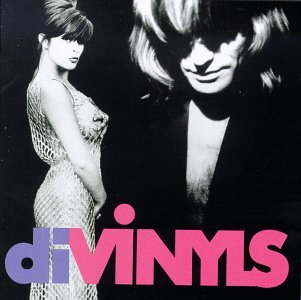
I'd bought a swag of CDs at cheaper American prices for friends and family and  stepped outside for a cigarette while TLOML stayed to fossick through the racks a little longer. Across 4th St opposite the store was a huge billboard advertising Divinyls, the new self-titled album by that great Australian band.
File:DivinylsAlbumcover.jpg
I thought it was cute that there I was, an Australian in New York standing in front of a big ad for an Aussie band's album. The artwork featured a striking shot of the Divinyls' voluptuous singer, Christina Amphlett.

It was quite early on a Saturday morning and there weren't too many people around but as my gaze turned west along 4th St I noticed a woman walking towards me on the other side of the street. She had long auburn hair and was wearing a pale mustard coloured leather overcoat. She looked up at the billboard as she drew closer to it and smiled.

"Ha," I thought, "she looks a bit like Christina Amphlett. How's that for a coincidence? Wait, wait a minute, shit ... that's her, that IS Christina Amphlett!"

We were almost the only two people on the street. She had been completely oblivious to me but I'm not embarrassed to admit I was gawping at her. Let's face it, all of Australia had been gawping at her for the better part of ten years. She turned the corner and kept walking.

Not long after, TLOML emerged from the store with her purchases. "See that billboard," I told her. "Well, you're not going to believe who I just saw..."

Christina Amphlett passed away earlier this week at her home in New York City after a long struggle against breast cancer. So long, Christina. I always thought the Divinyls were one of the great Australian bands and you one of the great Australian singers.


26 April, 2013

Here In My Car - Ad Nauseam

Another six albums on the car's 6-stacker CD player, all from around the same time period.

BBC Sessions: Cream (2003) - (recorded 1966-68)
God bless the BBC for inviting so many seminal English rock bands into the studio during the 1960s to be recorded and\or broadcast live over the airwaves. The first CD-release in this series was The Beatles Live at the BBC. It wasn't all musical altruism though: the BBC would hold the rights to those performances and could re-broadcast them at will, thus avoiding considerable royalty payments. Shame about them not being careful enough to hang onto the original master tapes though.
This recording brings together, as most in the BBC Sessions series do, numerous  appearances on various BBC programmes. The album opens with the Saturday Club host gee-ing up all of the cool cats out there about The Cream in a retro-cute accent that tries for mid-Atlantic but barely makes it out of the Western Approaches. Still, although Eric Clapton is the only band-member interviewed, he makes a lot of sense, as we've come to expect from ol' Slowhand.

It's a fairly comprehensive record of the totality of what Cream were about, containing 26 predominantly live tracks in all, including the majority of their classic songs and some contra-intuitive choices such as: Wrapping Paper; I'm So Glad; Rollin' and Tumblin'; and We're Going Wrong;  The sound quality is variable - but only from fair to atrocious - and is  reminiscent of the calibre of what used to come out of my scratchy transistor radio on hot days at Ocean Grove surf beach.

And so, even though it's a comprehensive collection of Cream's catalogue, and brings back how exciting they were across the blues, rock, and psychedelic genres (and in fusions of the above), if you're interested in a live Cream set of higher quality, in both production values and performances, Live Cream Volume II is a much better bet than this album.


Sweetheart of the Rodeo: The Byrds (1968)
Recorded in Nashville, Sweetheart of the Rodeo represented a major departure for The Byrds, but one that reflected the synergy in the roots of Roger McGuinn; Chris Hillman; and new band-member Gram Parsons. And although it was a move that kept them very much in touch with the many bands and artists for whom this album would prove profoundly influential, it shrunk and shifted the Byrds' hitherto mainstream folk-rock-psychedelic fan base.
The Byrds' sixth studio album was originally intended to be a magnum opus double-LP in which the Byrds would address the history of American music. But as with the Who's ambitious Lifehouse project, which fizzled out into the superb Who's Next, the Byrds may have dodged a bullet by confining themselves to a single-LP country album.

Guitarist-songwriter Gram Parsons had auditioned to join as a piano player to replace David Crosby after Crosby had been dismissed midway through the band's previous Notorious Byrd Brothers album. Parsons would end up augmenting and intensifying the existing country influences of McGuinn and Hillman.

The album opens with a beautiful Dylan cover from his Basement Tapes, You Aint Goin' Nowhere, all rich harmonies and plaintive pedal steel. I Am A Pilgrim and The Christian Life evoke Parsons' gospel roots while Pretty Boy Floyd explores American 20th Century folk traditions. The poignant Hickory Wind became Parsons' signature tune and it's not hard to see why.

The bonus tracks on the 1993 reissue are very worthwhile additions. You see, the management of Parsons previous outfit, the International Submarine Band, still held the rights to a number of his compositions and Parsons was legally forbidden to sing the lead vocals on those songs. The Byrds pushed ahead on re-takes with Roger McGuinn filling in for Parsons, and doing quite creditably. The bonus tracks include the original takes with the Parsons vocals restored - so this is one of those times when the bonus tracks really are, well, a bonus!

After this album's mixed reception, Parsons took to hanging with Keith Richard and abruptly left the Byrds on the eve of a South African tour, reportedly after Richard informed him that the Stones didn't tour under apartheid regimes.


Bare Wires: John Mayall's Bluesbreakers (1968)
This was the last album credited to John Mayall's Bluesbreakers. Future Mayall releases would bear his name only above the title.
If you're anything like me, you'll have bought John Mayall albums to gather the early work of seminal blues guitar players like Eric Clapton; Peter Green; and Mick Taylor, who fills the role on this album. But then you might have found multi-instrumentalist Mayall's rich and varied homages to a range of blues styles, some of them uniquely his own, to your liking just for their own sake. The Yardbirds have a similar persona.

This is not the Bluesbreakers' most solid album: Bluesbreakers with Clapton; A Hard Road with Green; and Crusade, also with Mick Taylor, are all superior. But I would put Bare Wires in about the same category as its 1969 follow-up, Blues From Laurel Canyon, Taylor's last with Mayall before joining the Rolling Stones - that is, it's a bit more meandering and self-indulgent than Mayall's previous efforts but if you give it more than just the one listen, you're not going to be putting it up on eBay anytime soon.


Crown of Creation: Jefferson Airplane (1968)
I'll be honest with you, Jefferson Airplane's fourth studio LP is no masterpiece. To be sure, none of their albums qualify in that regard, but Crown of Creation is their most consistent effort overall, and has a number of standout tracks.
As with most groups that sit somewhere in the art-rock pantheon, the Airplane did a lot of experimenting. Some of it worked beautifully, and some of it fell pretty flat. The album's opening track, Grace Slick's Lather, falls into this nice-try category - and that kazoo solo: puh-lease! But there are delightful curios: like the David Crosby composition Triad, rejected by his fellow Byrds in 1967 and not recorded by him until Crosby, Stills, Nash and Young's 1970 double live set 4-Way Street; and guitarist Jorma Kaukonen's drawling Star Track.  

Greasy Heart is full of archetypal Slick delivery, all harsh vituperation, set against Kaukonen's fuzz-drenched guitar, while guitarist Paul Kantner's title track and House at Pooneil Corner demonstrate how the art-rock thing can work so well when it combines with West Coast influences.

For me, Jefferson Airplane's strengths and weaknesses, encapsulated in Crown of Creation, are all of a kind. And I've got big soft spot for the group, both because of their strengths, and in spite of their weaknesses.


Traffic: Traffic (1968)
You might know this outfit from its signature hit single of 1967, Hole In My Shoe. You know, that trippy-hippy song covered by Nigel Planer from the Young Ones in 1984. Traffic were a fine example of the British psychedelic-rock genre, with really catchy songs and pure talent that just seemed to come pouring out of the speakers when I first heard them. And why not? Any band that boasted Steve Winwood and Dave Mason as principal songwriters (who didn't collaborate, incidentally) should do just that.

Admittedly, it's unusual for an eponymous album to not be a debut, but Traffic managed it with this Jimmy Miller-produced second album of theirs. There's a big drum sound from Jim Capaldi that really propels all of their songs right along and production values are higher than the psychedelic-rock genre is usually known for.
The album alternates Mason and Winwood compositions in its track-listing and although it's easy to differentiate, the group feel is strong and harmonious throughout an LP with no shortage of good songs like: the multi-layered You Can All Join In; Winwood's bouncy Pearly Queen; Feelin' Alright, one of Mason's signature tunes; and Crying to be Heard, with its yearning harmonies.

If anything, Traffic provided a more polished, musically competent take on psychedelia than their American counterparts and are well worth any time (or money!) spent exploring their output.


I had this album on my Amazon wish list and forked out my hard-earned for the whole CD on the basis of one song only: Picture Book. It was a warm, boppy, plaintive feelgood song that got a little airplay on Melbourne top-40 radio station 3XY but seemingly nowhere else, during the summer of 1968-69, .

The Kinks driving force, Ray Davies, envisioned this collection as a concept album paying nostalgic homage to English village life. Never mind that Davies had never lived this particular dream growing up in inner London's working class Muswell Hill. He set his vision across a range of exciting musical styles in direct opposition to the apocalyptic post-psychedelic feel of so much rock music during this brief period. So it makes perfect sense, from Davies' point of view, that Village Green celebrates a laid-back Englishness that stands in stark contrast to contemporaneous releases like the Beatles' White album, Beggars Banquet by the Rolling Stones, or Led Zeppelin's first LP.

There's the rural blues of Last of the Steam Powered Trains, the authentic reggae feel of the whimsical Monica, and further similarly evocative character-driven songs like Walter and All of My Friends Were There. But it's all summed up rather nicely in the delightful title track, which opens the album. Indeed, Village Green is soaked with Davies' fondness and yearning for the lifestyle and rich cast of characters the album captures.

This is a terrific album, one of my all-time favourites, and all the more so because it reveals a previously hidden side of the Kinks. One that led me to a fuller appreciation of the genius of Ray Davies, and made me determined to explore the Kinks' back-catalogue in more detail.