Astronomers at Mt Stromlo Observatory learned yesterday that their deep-space search for the Football World has fallen victim to budget cuts. The decision has sparked dismay in the close-knit space-science community.
“It’s the end of one of science’s most noble quests,“ a dejected Professor of Astrophysics Scott Palmer said last night. “I mean, who hasn’t wondered about the possibility of a real Football World after so many tantalizingly brief references to its existence? Like, "the Football World is in shock", or "the Footbal World is in turmoil". Now, that suggests an object with a breath-takingly volatile, turbulent atmosphere. Or at the very least, a global climate that mirrors a winter’s day at Waverley.”
But what about recent data suggesting that this possible Football World, despite its extreme distance and unknown location, might exert a strong gravitational pull on large parts of Australia between March and September?
“Oh, there’s no doubt about that. But we’d also developed a theory that radiation of an as-yet -unknown type emitted from the Football World was causing disturbingly extreme fluctuations in human emotion and behaviour.” However, Professor Palmer conceded the only clear evidence to support this were crowd-reaction shots from Channel 7’s match coverage.
Federal Science Minister Ian Cleland said this morning that most staff would be re-deployed to work on the still fully-funded search for the Marvel Comics Universe.
A pale sun was providing little in the way of warmth for downtown New York City that April morning. It was 1991 and The Love of My Life and I had walked from our midtown Manhattan hotel to Tower Records in Greenwich Village.
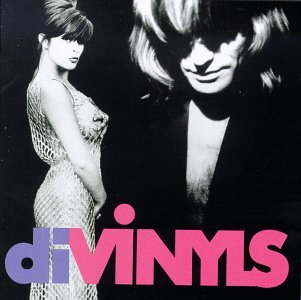
I'd bought a swag of CDs at cheaper American prices for friends and family and stepped outside for a cigarette while TLOML stayed to fossick through the racks a little longer. Across 4th St opposite the store was a huge billboard advertising Divinyls, the new self-titled album by that great Australian band.
I thought it was cute that there I was, an Australian in New York standing in front of a big ad for an Aussie band's album. The artwork featured a striking shot of the Divinyls' voluptuous singer, Christina Amphlett.
It was quite early on a Saturday morning and there weren't too many people around but as my gaze turned west along 4th St I noticed a woman walking towards me on the other side of the street. She had long auburn hair and was wearing a pale mustard coloured leather overcoat. She looked up at the billboard as she drew closer to it and smiled. "Ha," I thought, "she looks a bit like Christina Amphlett. How's that for a coincidence? Wait, wait a minute, shit ... that's her, that IS Christina Amphlett!" We were almost the only two people on the street. She had been completely oblivious to me but I'm not embarrassed to admit I was gawping at her. Let's face it, all of Australia had been gawping at her for the better part of ten years. She turned the corner and kept walking. Not long after, TLOML emerged from the store with her purchases. "See that billboard," I told her. "Well, you're not going to believe who I just saw..." Christina Amphlett passed away earlier this week at her home in New York City after a long struggle against breast cancer. So long, Christina. I always thought the Divinyls were one of the great Australian bands and you one of the great Australian singers.
Another six albums on the car's 6-stacker CD player, all from around the same time period.
BBC Sessions: Cream (2003) - (recorded 1966-68) God bless the BBC for inviting so many seminal English rock bands into the studio during the 1960s to be recorded and\or broadcast live over the airwaves. The first CD-release in this series was The Beatles Live at the BBC. It wasn't all musical altruism though: the BBC would hold the rights to those performances and could re-broadcast them at will, thus avoiding considerable royalty payments. Shame about them not being careful enough to hang onto the original master tapes though.
This recording brings together, as most in the BBC Sessions series do, numerous appearances on various BBC programmes. The album opens with the Saturday Club host gee-ing up all of the cool cats out there about The Cream in a retro-cute accent that tries for mid-Atlantic but barely makes it out of the Western Approaches. Still, although Eric Clapton is the only band-member interviewed, he makes a lot of sense, as we've come to expect from ol' Slowhand.
It's a fairly comprehensive record of the totality of what Cream were about, containing 26 predominantly live tracks in all, including the majority of their classic songs and some contra-intuitive choices such as: Wrapping Paper; I'm So Glad; Rollin' and Tumblin'; and We're Going Wrong; The sound quality is variable - but only from fair to atrocious - and is reminiscent of the calibre of what used to come out of my scratchy transistor radio on hot days at Ocean Grove surf beach.
And so, even though it's a comprehensive collection of Cream's catalogue, and brings back how exciting they were across the blues, rock, and psychedelic genres (and in fusions of the above), if you're interested in a live Cream set of higher quality, in both production values and performances, Live Cream Volume II is a much better bet than this album.
Sweetheart of the Rodeo: The Byrds (1968) Recorded in Nashville, Sweetheart of the Rodeo represented a major departure for The Byrds, but one that reflected the synergy in the roots of Roger McGuinn; Chris Hillman; and new band-member Gram Parsons. And although it was a move that kept them very much in touch with the many bands and artists for whom this album would prove profoundly influential, it shrunk and shifted the Byrds' hitherto mainstream folk-rock-psychedelic fan base.
The Byrds' sixth studio album was originally intended to be a magnum opus double-LP in which the Byrds would address the history of American music. But as with the Who's ambitious Lifehouse project, which fizzled out into the superb Who's Next, the Byrds may have dodged a bullet by confining themselves to a single-LP country album.
Guitarist-songwriter Gram Parsons had auditioned to join as a piano player to replace David Crosby after Crosby had been dismissed midway through the band's previous Notorious Byrd Brothers album. Parsons would end up augmenting and intensifying the existing country influences of McGuinn and Hillman.
The album opens with a beautiful Dylan cover from his Basement Tapes, You Aint Goin' Nowhere, all rich harmonies and plaintive pedal steel. I Am A Pilgrim and The Christian Life evoke Parsons' gospel roots while Pretty Boy Floyd explores American 20th Century folk traditions. The poignant Hickory Wind became Parsons' signature tune and it's not hard to see why.
The bonus tracks on the 1993 reissue are very worthwhile additions. You see, the management of Parsons previous outfit, the International Submarine Band, still held the rights to a number of his compositions and Parsons was legally forbidden to sing the lead vocals on those songs. The Byrds pushed ahead on re-takes with Roger McGuinn filling in for Parsons, and doing quite creditably. The bonus tracks include the original takes with the Parsons vocals restored - so this is one of those times when the bonus tracks really are, well, a bonus!
After this album's mixed reception, Parsons took to hanging with Keith Richard and abruptly left the Byrds on the eve of a South African tour, reportedly after Richard informed him that the Stones didn't tour under apartheid regimes.
This was the last album credited to John Mayall's Bluesbreakers. Future Mayall releases would bear his name only above the title.
If you're anything like me, you'll have bought John Mayall albums to gather the early work of seminal blues guitar players like Eric Clapton; Peter Green; and Mick Taylor, who fills the role on this album. But then you might have found multi-instrumentalist Mayall's rich and varied homages to a range of blues styles, some of them uniquely his own, to your liking just for their own sake. The Yardbirds have a similar persona. This is not the Bluesbreakers' most solid album: Bluesbreakers with Clapton; A Hard Road with Green; and Crusade, also with Mick Taylor, are all superior. But I would put Bare Wires in about the same category as its 1969 follow-up, Blues From Laurel Canyon, Taylor's last with Mayall before joining the Rolling Stones - that is, it's a bit more meandering and self-indulgent than Mayall's previous efforts but if you give it more than just the one listen, you're not going to be putting it up on eBay anytime soon.
I'll be honest with you, Jefferson Airplane's fourth studio LP is no masterpiece. To be sure, none of their albums qualify in that regard, but Crown of Creation is their most consistent effort overall, and has a number of standout tracks.
As with most groups that sit somewhere in the art-rock pantheon, the Airplane did a lot of experimenting. Some of it worked beautifully, and some of it fell pretty flat. The album's opening track, Grace Slick's Lather, falls into this nice-try category - and that kazoo solo: puh-lease! But there are delightful curios: like the David Crosby composition Triad, rejected by his fellow Byrds in 1967 and not recorded by him until Crosby, Stills, Nash and Young's 1970 double live set 4-Way Street; and guitarist Jorma Kaukonen's drawling Star Track.
Greasy Heart is full of archetypal Slick delivery, all harsh vituperation, set against Kaukonen's fuzz-drenched guitar, whileguitarist Paul Kantner's title track andHouse at Pooneil Corner demonstrate how the art-rock thing can work so well when it combines with West Coast influences.
For me, Jefferson Airplane's strengths and weaknesses, encapsulated in Crown of Creation, are all of a kind. And I've got big soft spot for the group, both because of their strengths, and in spite of their weaknesses.
You might know this outfit from its signature hit single of 1967, Hole In My Shoe. You know, that trippy-hippy song covered by Nigel Planer from the Young Ones in 1984. Traffic were a fine example of the British psychedelic-rock genre, with really catchy songs and pure talent that just seemed to come pouring out of the speakers when I first heard them. And why not? Any band that boasted Steve Winwood and Dave Mason as principal songwriters (who didn't collaborate, incidentally) should do just that.
Admittedly, it's unusual for an eponymous album to not be a debut, but Traffic managed it with this Jimmy Miller-produced second album of theirs. There's a big drum sound from Jim Capaldi that really propels all of their songs right along and production values are higher than the psychedelic-rock genre is usually known for.
The album alternates Mason and Winwood compositions in its track-listing and although it's easy to differentiate, the group feel is strong and harmonious throughout an LP with no shortage of good songs like: the multi-layered You Can All Join In; Winwood's bouncy Pearly Queen; Feelin' Alright, one of Mason's signature tunes; and Crying to be Heard, with its yearning harmonies.
If anything, Traffic provided a more polished, musically competent take on psychedelia than their American counterparts and are well worth any time (or money!) spent exploring their output.
I had this album on my Amazon wish list and forked out my hard-earned for the whole CD on the basis of one song only: Picture Book. It was a warm, boppy, plaintive feelgood song that got a little airplay on Melbourne top-40 radio station 3XY but seemingly nowhere else, during the summer of 1968-69, .
The Kinks driving force, Ray Davies, envisioned this collection as a concept album paying nostalgic homage to English village life. Never mind that Davies had never lived this particular dream growing up in inner London's working class Muswell Hill. He set his vision across a range of exciting musical styles in direct opposition to the apocalyptic post-psychedelic feel of so much rock music during this brief period. So it makes perfect sense, from Davies' point of view, that Village Green celebrates a laid-back Englishness that stands in stark contrast to contemporaneous releases like the Beatles' White album, Beggars Banquet by the Rolling Stones, or Led Zeppelin's first LP.
There's the rural blues of Last of the Steam Powered Trains, the authentic reggae feel of the whimsical Monica, and further similarly evocative character-driven songs like Walter and All of My Friends Were There. But it's all summed up rather nicely in the delightful title track, which opens the album. Indeed, Village Green is soaked with Davies' fondness and yearning for the lifestyle and rich cast of characters the album captures.
This is a terrific album, one of my all-time favourites, and all the more so because it reveals a previously hidden side of the Kinks. One that led me to a fuller appreciation of the genius of Ray Davies, and made me determined to explore the Kinks' back-catalogue in more detail.
I was given this album, the British import version with the controversial nudes cover, for my 18th birthday in Nov 1977. I have to admit, I rate it slightly lower on the quality scale than the Experience's debut LP, Are You Experienced? (1967), but it's still pretty fabulous.
The story of the album's making is one of late-night party sessions in New York's Record Plant studios. Hendrix would drag friends and hangers-on into the studio after carousing at his favourite New York clubs. This annoyed bass player Noel Redding so much he stopped bothering to turn up! The album features guest artists such as Steve Winwood; Jack Casady; and Dave Mason. And if Brian Jones had been less comatose, it would have been his piano on All Along the Watchtower.
Overall, the album is pretty even in its quality, with two killer standout tracks that close out this double-LP: All Along The Watchtower; and Voodoo Chile (Slight Return). Jimi's playing is sensational, as you might expect, and he makes use of some innovative production techniques that enhance his guitar work - like phasing back and forth between stereo-left and stereo-right.
Like I said, Are You Experienced? is more deserving of the classic label, but this was all Jimi's and you've got to love it for that too.
It was one of my sisters' boyfriends who left this at our place in 1973. He never came back for it. I'd heard of Neil Young but knew nothing about him. And even being a Dylan fan didn't prepare me for Young's idiosyncratic vocal style. I thought he was kidding.
But Harvest has a haunting quality to it and beautiful production values. The crew for Young's third solo album features identities such as Linda Ronstadt; James Taylor; and Crosby, Stills and Nash. Harvest's opening track, Out On The Weekend, combines Young's folk and country influences.
There are a couple of overblown dirges that fans of this LP never mention (There's A World; A Man Needs A Maid) but everything else hangs together beautifully: the shuffling title track with it's plaintive pedal steel; the timeless trilogy of Heart of Gold, Old Man, and The Needle and the Damage Done; and two standout rockers in Alabama and Words.
The album's ubiquity has probably worked against it somewhat - you need to take it out of the record rack and play it right through, and all the reasons why you liked it so much in the first place will come flooding back to you.
This was one of the five albums my older sister bought for $5.95 all up when she joined the Australian Record Club in 1972. I was thirteen and loved it right from its first spin on our new second hand record player.
The Who needed a follow-up to their ground-breaking double-album rock opera Tommy and Pete Townsend, at his creative peak, had another massive work in mind. The Lifehouse project was designed to be another rock opera but when no-one else could understand what Pete was on about, it "fizzled out" into nine terrific songs and one of the all-time great albums.
If you ever doubted Keith Moon's place in the pantheon of great rock drummers, this is the album to turn you around. You can listen to him right across the whole LP and damned if he isn't doing something breathtaking at all times. And that probably goes for the rest of the group too.
The album opener, Baba O'Riley (and I don't mind if you only know this as oh yeah, that-CSI-Miami-teenage-wasteland-music) is a killer, with atmospheric synthesizers and an electric violin giving it an almost eastern European undertaste to its hard rock. All of the tracks are great - if there's a weak one, it's probably the six-minute Song Is Over that closes side one but Pete could probably explain why it belongs there even if I can't. The iconic Won't Get Fooled Again is just one of the brilliant songs on this album that also includes Behind Blue Eyes; Bargain and the John Entwistle-composed My Wife. Fabulous, all of them.
As an exercise, don't play this album for a number of years and then see what happens when you listen to it again: it'll be like a reunion with a long-lost best friend with whom you don't know how or why you ever lost contact.
My first encounter with the James Gang happened back in 1976 when my stoner next-door neighbours moved out and left me all their records. This was one of the few playable ones, and the only reason I put it on for a listen was that it featured guitarist Tommy Bolin, who had just moved from the James Gang to Deep Purple to replace Richie Blackmore.
Bolin's playing is highly distinctive and he's capable not only of ripping it up like any 70s guitar hero, but also of great subtlety and charm. He begins the album using an echo-phaser for the intro to the opening song, Standing In the Rain, a great song.
There are purist James Gang fans who won't listen to anything post-Joe Walsh but this album is very consistent and the rhythm section of Jim Fox and Dale Peters, permanent band members through a passing parade of lineup changes, deserve plaudits for their outstanding work.
Vocalist Roy Kenner has a very distinctive style, highlighted on his multi-tracked a capella signature tune Rather Be Alone With You, while Bolin handles the lead vocals on Alexis, a ballad that builds while showcasing his repertoire of licks and tricks.
The James Gang were a really good band and, like the Yardbirds and Bluesbreakers, more than just an early staging post for prominent guitar players. It's a shame this lineup didn't put out more albums than this one and its 1974 follow up, Miami.
What a tape of this album was doing on the car stereo of one of my dedicated heavy-metal fan best friends back in 1978, I'll probably never know. But it's a safe bet that the musicianship and songwriting on this album would sway even those least likely to appreciate Steely Dan's particular style of jazz-influenced soft-rock. And please, not that there's anything wrong with that...
The album opens with the near-manic Bodhishatva, and if this is your first taste of Steely Dan, the timing shifts and interweaving piano and guitar runs are bound to make a solid first impression. Even 40 years after its release, this album's high production values give it an immediacy that even Steely Dan's harshest critics (too LA-session-muso-slick, no rawness they would say) couldn't deny. The boppy autobiographical My Old School, a minor hit on US FM radio, evokes a universal nostalgia for lost youth that is thankfully unsentimental.
Despite the album's overall quality, none of the other tracks quite measure up to the elite standard of these two tracks, so it might be tempting for the listener to consign Countdown to Ecstasy to the too- readily-disdained "easy listening" category.
I think that would be selling it short though - there's just too much going on with this LP.
Stormbringer - Deep Purple (1974) I was one of those purists who wanted nothing to do with any Deep Purple lineup other than the classic Mark II (Ian Gillan; Richie Blackmore; Roger Glover; Jon Lord; and Ian Paice). It was a short-sighted stance, because the lineup featured on Stormbringer (with David Coverdale and Glenn Hughes replacing Ian Gillan and Roger Glover on vocals and bass respectively), produced two significant albums: 1973's Burn; and this superb outing, set to be Blackmore's last before founding Rainbow.
As with Burn, Coverdale shares vocals with bassist Glenn Hughes and their voices are highly complementary. Although the cock-rock flavour of songs like Lady Double Dealer and Hi-Ball Shootermay make it all seem a bit dated, that minor sticking point aside, the album hangs together as more than just a collection of really good songs. The album's highlights are its more ballady numbers like the exquisite Gypsy, Coverdale's melancholy Soldier of Fortune and the Hughes-led Dear Prudence homage, Holy Man, but unlike a great many acknowledged classic albums, there are no weak songs on this LP.
Blackmore, Lord and Paice are as good as ever on Stormbringer, and even though Richie is a little more subdued than on previous Purple albums, the overall sound doesn't suffer.
I must confess to not expecting much from Deep Purple's least heralded album - but it's the one I now consider their most thoughtful and creative.
All that came out of that envelope was a single sheet of paper. No colour-coded reams, like the other guys were sifting through. I wondered what the hell was going on, so I started reading. It was a terse, badly typed standard letter that went something like this:
Dear Mr and Mrs Litter, (scrawled in biro)
Your son Lad(again with the biro) will not be offered a place in Form Five for 1976. His behaviour and attitude during the course of this year have not met the standards we require at Cheap and Rundown Inner City Catholic Boys College.
I will be available by appointment should you wish to discuss this. However, this decision has been made after careful consideration, and the school is convinced that Lad would be best advised to seek educational opportunities elsewhere.
Yours Faithfully, Br. Vindictican
As you can no doubt imagine, there was a fair bit going through my mind once I'd got to the bottom of the page. My school life was flashing in front of me and I was starting to overdose on the dread of what my parents might say and do. Not a spare thought for how my parents might feel, mind you, just how I'd cope with their reaction. Any sensitivity I had was solely concentrated on my own feelings. There wasn't so much as a skerrick of room for concern about what it might mean to anyone else.
What to do? Go home. Slowly. Try to delay the inevitable for as long as possible. I can't recall speaking to anyone on the way out the door but as I entered the bluestone lane leading away from the school there were two classmates of mine lounging against the paling back fences, smoking and looking worried.
Turns out they'd both been handed thin envelopes too. These guys weren't particular friends of mine but the collective sympathy was what we all needed. We smoked and talked briefly out of long, ashen faces about our questionable futures. One of them thought he might cop a physical battering once his old man got the news. At least I was going to be spared that. We went our separate ways at the end of the lane and I headed off to the bus stop at the corner of Rathdowne and Park Sts in North Carlton.
I was quite relieved to see Elizabeth on the later bus that evening, although she didn't detect anything like relief in my demeanour.
"Are you alright? You look really pale."
I told her about the letter and how I didn't care about getting flicked from school, but felt pretty apprehensive about how my folks' would take the news. She went to a local Catholic girls' school - and seemingly without any effort at all made their frumpy uniform exceed its design specifications by a long way - but it was her genuine concern that really brightened things up for me.
"So why did they kick you out?"
I tried to explain how I hadn't done anything really bad, but had a poor attitude and had made no effort to improve in any way. Tried to slip in the growing feeling that I might have been a bit hard done by, but that my folks would never believe that.
She thought it sounded plausible and urged me to just tell mum and dad the truth and they'd understand. I don't know if she ever realized how much she helped.
I had a short walk from the bus stop to our Ascot Vale home and I'd resolved to follow Elizabeth's advice and hope for the best.